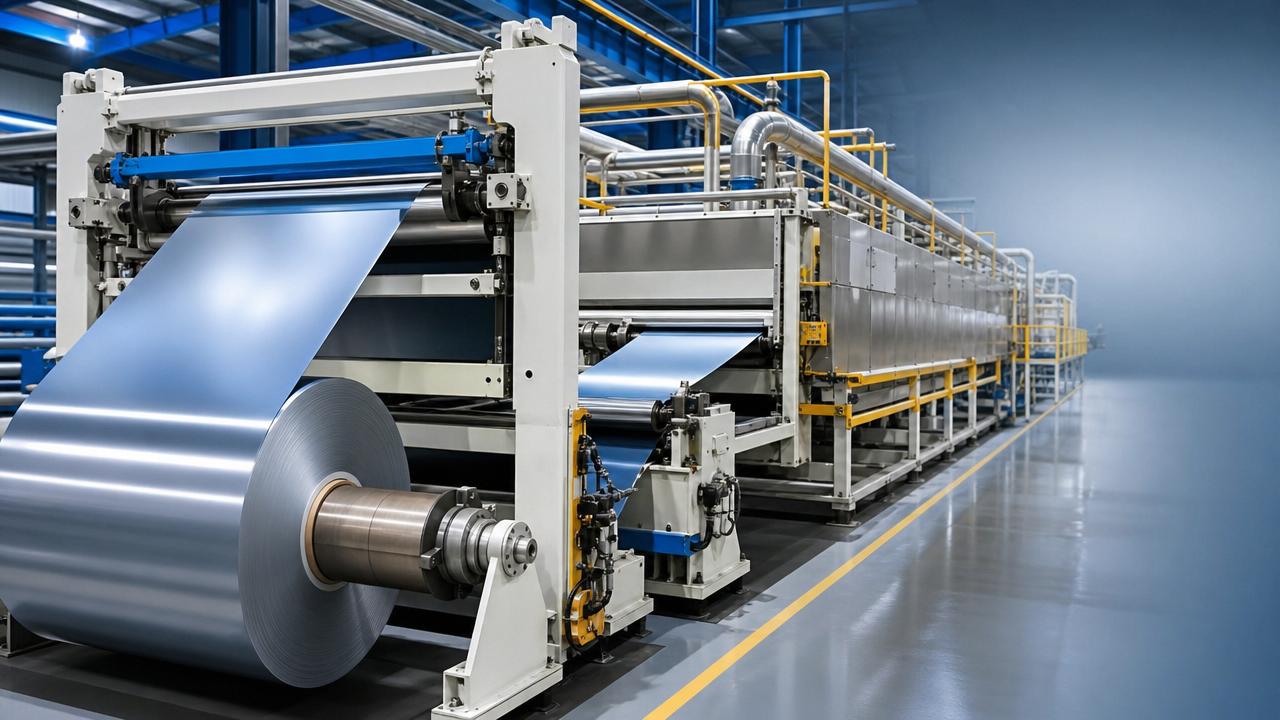
In high-speed coating lines, even small process variations can significantly impact PPGI Production quality, affecting coating adhesion, surface appearance, and long-term corrosion resistance. For quality control and safety management, the challenge is rarely one single defect. It is usually a chain of small deviations that build into unstable output. Getting consistent results means watching the whole line, not just the paint.
This is why PPGI Production should be controlled as a connected process. Steel substrate condition, pretreatment chemistry, oven balance, line speed, and recoating timing all interact. When one variable drifts, quality may drop before alarms clearly show it.
1. Start with the steel surface, not the coating
Many coating defects begin before paint application. In PPGI Production, the substrate condition decides whether later layers can bond, level, and cure the right way.
- Check incoming galvanized strip for oil, passivation residue, edge damage, and zinc layer variation. Small surface changes can lead to pinholes, poor wetting, or uneven color after curing.
- Verify strip flatness and tension stability before coating. Camber, waviness, or edge buckle can disturb roll contact, causing film thickness variation across the strip width.
- Control storage conditions for coils before line entry. Condensation, dust, or transport scratches often become visible only after topcoat application, when rework is already expensive.
A common mistake is accepting “visually clean” strip without checking surface energy or residual contamination. Clean-looking steel can still reject pretreatment and create later adhesion failure.
When substrate quality shifts between coil batches
Batch changes are a frequent weak point in PPGI Production. A line may run well for hours, then suddenly show orange peel, crater defects, or gloss change after a new coil enters.
In that case, compare zinc coating weight, roughness, and residual oil first. It is often faster than adjusting paint settings blindly.
2. Pretreatment consistency often decides final reliability
Pretreatment is one of the biggest quality gates in PPGI Production. If cleaning and chemical conversion are unstable, even premium paint will struggle to perform.
- Monitor cleaner concentration, spray pressure, and bath temperature together. A good reading in one area cannot compensate for weak impact, short contact time, or chemistry drift.
- Track rinse water conductivity and nozzle condition daily. Dirty rinse stages can carry contaminants forward, reducing conversion coating quality and weakening corrosion resistance.
- Measure conversion coating weight and uniformity, not just bath pH. Surface reaction quality matters more than chemical numbers alone when defects appear in field exposure.
Safety also matters here. Poor ventilation around pretreatment sections can change evaporation rate, operator exposure, and chemical concentration behavior at the same time.
What gets overlooked during fast troubleshooting
When adhesion fails, teams often jump to primer formulation or oven settings. But in many PPGI Production cases, the root cause sits in rinse carryover, nozzle blockage, or poor drainage between sections.
That is why visual checks should be backed by conductivity, contact angle, and coating weight records. Quick confirmation beats repeated trial-and-error adjustments.
3. Coater setup controls film build and appearance
In high-speed PPGI Production, the coater section must stay mechanically stable. Small changes in gap, roll hardness, or viscosity can create visible defects within minutes.
- Confirm paint viscosity at actual operating temperature, not only lab temperature. Viscosity drift changes pickup, leveling, and edge coverage, especially during long continuous runs.
- Inspect coating rolls for wear, contamination, and hardness change. Damaged or aging rolls can produce chatter marks, streaks, and unstable film transfer at high speed.
- Check wet film thickness across center and edges frequently. Uniform average coating weight can still hide widthwise imbalance that later causes color and gloss variation.
Even support materials elsewhere in steel plants show the same principle. Stable surface condition matters whether handling strip or related products like BWG 8 Galvanized Steel Wire.
If defects appear only at higher line speed
Speed-sensitive defects usually point to fluid transfer or heat input limits. Splashing, ribbing, or incomplete leveling often appears when the process window is narrower than expected.
Before reducing speed permanently, review viscosity, roll pressure, and flash-off time. The line may still support the target rate after proper balancing.
4. Oven profile and curing determine long-term performance
A coating that looks good at exit can still fail later. In PPGI Production, undercure and overbake both affect flexibility, adhesion, chalking resistance, and service life.
- Use peak metal temperature and dwell time together. Oven air temperature alone does not show whether the steel and coating actually reached full cure conditions.
- Check temperature uniformity across strip width and through oven zones. Uneven heating leads to color shift, gloss difference, and inconsistent mechanical performance.
- Review exhaust balance and solvent removal efficiency. Poor ventilation can affect curing stability and also increase flammability risk in high-speed coating environments.
This is one of the clearest links between quality and safety. A cure problem is not only a product issue. It may also signal airflow imbalance or unsafe solvent accumulation.
5. Tension, cooling, and rewind also affect PPGI Production quality
It is easy to focus on coating and forget post-cure handling. But in PPGI Production, defects can be added after the coating is already technically correct.
- Stabilize strip tension through cooling and recoiling sections. Sudden tension shifts can create scratches, pressure marks, or shape-related contact damage on finished surfaces.
- Confirm strip temperature before rewind. Coils wound too hot may block, print, or lose appearance quality even if the coating passed immediate exit inspection.
- Inspect separator materials, guide rolls, and edge contact points. Mechanical damage after curing is often mistaken for paint failure during final quality review.
This stage deserves routine audits. A perfect oven profile cannot protect a surface from bad rewind practice.
6. Data discipline is what keeps PPGI Production repeatable
The best-performing lines usually do one thing well: they connect defect patterns to process data quickly. That makes PPGI Production more predictable and easier to correct.
- Trend key variables by coil and shift, including PMT, viscosity, coating weight, conductivity, and line speed. Stable averages can still hide short but harmful excursions.
- Use standard defect language across operations and inspection. Clear naming reduces confusion and helps trace whether the issue began mechanically, chemically, or thermally.
- Link corrective action to verification steps. After each adjustment, confirm with adhesion, gloss, cure, and appearance checks instead of relying on visual judgment alone.
In mixed steel processing environments, this mindset carries over broadly. Consistency controls surface products from coated sheet to items such as BWG 8 Galvanized Steel Wire.
A simple way to reduce repeated defects
Build a short response path for each defect family. For example, if blistering appears, check substrate cleanliness, pretreatment carryover, and PMT before changing paint chemistry.
That order saves time and avoids unnecessary process disturbance.
What to review first on the next line audit
If PPGI Production quality has become harder to hold at target speed, start with the basics in sequence. Check incoming strip condition, pretreatment effectiveness, coater stability, cure profile, then rewind handling.
Most recurring defects come from interaction between stages, not from one isolated fault. A tighter review of handoff points usually delivers the fastest improvement.
The practical next step is simple: pick one recent defect, trace it backward through these five areas, and confirm each point with data. That approach makes PPGI Production more stable, safer, and easier to repeat.
Get real-time quotes
Interested? Leave your contact details.