
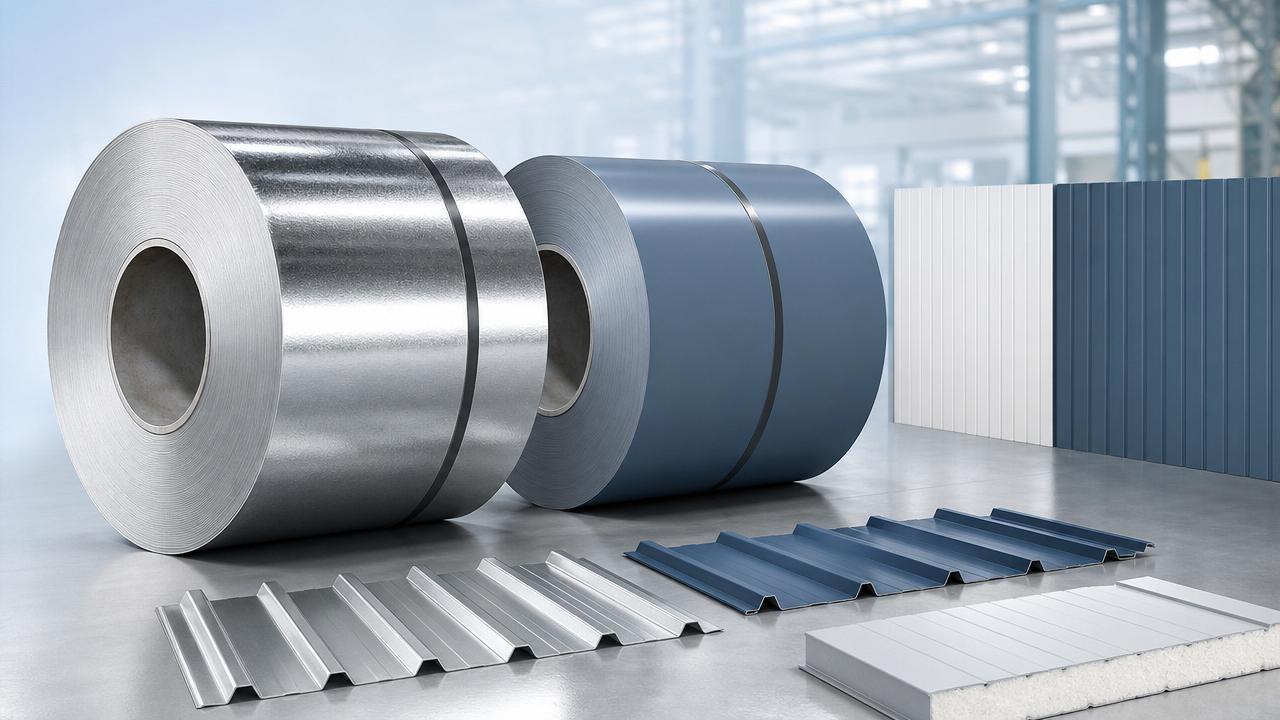
Why Galvanized Steel Coil and Prepainted Steel Are Often Compared
Choosing between Galvanized Steel Coil and prepainted steel affects more than surface appearance. It changes purchase price, fabrication flow, coating life, and even rejection rates during production.
For cost-driven buying decisions, the better option is not always the cheaper ton price. A lower upfront quote can create higher forming loss, repainting work, or shorter service life.
This comparison focuses on what matters in real sourcing work: cost structure, coating performance, use case fit, and the checks worth making before placing an order.
The Core Difference in Simple Terms
Galvanized Steel Coil is carbon steel coated with zinc. Its main job is corrosion protection. The finish is practical, industrial, and usually ready for further processing.
Prepainted steel starts from a coated steel substrate, often galvanized or galvalume, then adds primer and paint layers. It offers both corrosion resistance and decorative finish.
In short, Galvanized Steel Coil is usually selected for function first. Prepainted steel is often selected when both function and final appearance matter.
A quick side-by-side view
Where the Cost Difference Really Comes From
The price gap is not only about raw steel. It comes from coating weight, paint system, line processing, color control, packaging, and stricter surface quality requirements.
Galvanized Steel Coil usually has a simpler cost structure. Base steel grade, zinc coating mass, thickness tolerance, and spangle requirement drive most of the quote.
Prepainted steel adds primer thickness, topcoat type, back coat, gloss level, color matching, and film durability. That is why its invoice price is often noticeably higher.
Still, that does not mean prepainted steel is always more expensive in total project terms. If it removes secondary painting, labor, VOC handling, and drying time, total installed cost may fall.
Cost checks worth making before comparing quotes
- Compare the same substrate thickness and coating mass. A low quote on Galvanized Steel Coil can hide reduced zinc weight, which directly lowers corrosion life and resale value.
- Check whether painting is included later in your process. Prepainted steel may cost more today, but can cut labor, energy use, and line occupancy tomorrow.
- Confirm packaging level for transport and storage. Surface-sensitive prepainted steel often needs better protection, and poor packing can erase any savings through damage claims.
- Ask for coil yield and width utilization data. Sometimes a slightly higher material price gives better blanking efficiency and lowers scrap in downstream forming.
- Review minimum order quantity and color batch limits. Prepainted steel often carries tighter production conditions, which can affect inventory pressure and replenishment flexibility.
Performance Differences That Matter in Daily Use
Corrosion resistance depends on more than the word “coated.” For Galvanized Steel Coil, zinc mass matters. For prepainted steel, both substrate protection and paint durability matter.
If the environment is industrial, coastal, or humid, material selection should consider service exposure, cut-edge behavior, and maintenance expectations, not just catalog claims.
What to verify on the technical side
- For Galvanized Steel Coil, verify zinc coating designation, adhesion, and passivation status. These details affect storage stain risk, forming results, and outdoor durability more than many expect.
- For prepainted steel, ask about paint type such as polyester, SMP, PVDF, or epoxy systems. Each performs differently under UV, chalking, chemical exposure, and forming stress.
- Check bend performance and T-bend results if parts will be profiled or folded. Nice-looking paint can still crack during fabrication if flexibility is not matched to the design.
- Confirm surface quality criteria in writing. Scratches, roller marks, color variation, and edge defects are handled very differently for visible and non-visible applications.
When Galvanized Steel Coil Makes More Sense
Galvanized Steel Coil is often the practical choice when the steel will be hidden, painted later, welded into assemblies, or used in utility-focused environments.
It is common in ducting, framing, cable trays, guardrails, structural accessories, and equipment housings where visual finish is secondary to corrosion protection and price control.
In fabrication-heavy projects, Galvanized Steel Coil can also simplify sourcing. It allows flexible downstream coating decisions, especially when final color or branding is not fixed yet.
Typical situations where it works well
- Use it when parts will be stamped, welded, or assembled before final finishing. This keeps the initial material cost lower and avoids damaging a decorative topcoat early.
- Choose it for hidden components or functional assemblies where surface aesthetics are not critical. The budget can then be focused on thickness, strength, and coating mass.
- It is also useful when demand changes quickly. Standard Galvanized Steel Coil is usually easier to source across multiple mills with shorter lead times.
When Prepainted Steel Justifies the Extra Price
Prepainted steel makes sense when the surface remains visible and appearance consistency matters. It is widely used for roofing sheets, wall panels, ceiling systems, doors, and appliance shells.
Its value shows up when installation speed matters. Because the finish is already applied, job sites avoid extra painting steps, curing delays, and quality variation from manual coating.
For branded or customer-facing products, color repeatability can be a real advantage. That repeatability is hard to achieve with separate post-painting across different batches.
Situations where the premium often pays back
- Use prepainted steel for exposed building envelopes where finish consistency, weathering, and installation speed all affect the final project cost, not only the material purchase price.
- It works well when the production line cannot support painting capacity. Buying a ready-finished coil can free labor and reduce bottlenecks in fabrication planning.
- For retail-facing products, avoid frequent color mismatch claims by defining gloss, film thickness, and approved color tolerances before ordering the first lot.
Common Oversights That Raise Total Cost
A common mistake is comparing Galvanized Steel Coil and prepainted steel only by ton price. That misses handling risk, protective film requirements, and the cost of surface rework.
Another oversight is ignoring forming sequence. If a part has sharp bends, deep draws, or roll forming stress, the coating system must match the process, not just the drawing.
Storage conditions matter too. Moisture exposure can stain galvanized surfaces, while trapped humidity and poor stacking can damage painted surfaces before production even starts.
In some mixed-material projects, buyers also source companion steel products alongside coils. For machined or support components, materials like A36/Q235/S235JR Carbon Steel Hexagonal Steel may be added depending on the assembly design.
A few risk reminders worth keeping in the file
- Do not approve substitute paint systems without testing. Lower-cost coatings may pass visual inspection at delivery but fail early under sunlight, salt, or temperature cycling.
- Avoid vague wording like “standard export quality.” Define exact acceptance criteria for thickness, coating weight, color, gloss, and surface defects before production begins.
- Request coil ID, OD, and weight limits that suit your line. Material that is technically compliant can still create handling problems if coil dimensions do not fit equipment.
A Practical Way to Decide Between the Two
Start with the end use, not the catalog category. Ask four simple questions: Will the part be visible? Will it be painted later? How aggressive is the environment? How complex is forming?
If appearance is not critical and processing flexibility matters, Galvanized Steel Coil usually offers the stronger value. If finish quality and installation speed matter, prepainted steel often wins.
For repeat programs, test both options on real parts. Compare not only material price, but also forming loss, surface rejection, labor time, and expected service life.
Useful steps before placing the order
- Prepare a side-by-side RFQ sheet listing substrate grade, thickness tolerance, coating class, finish type, and packaging requirements. This prevents misleading quote comparisons from the start.
- Ask for sample panels or trial coils when surface quality matters. A small test can reveal bend cracks, color variation, and protective film issues before volume commitment.
- Document the exact application environment and expected lifespan. That gives suppliers a clearer basis for recommending the right Galvanized Steel Coil or paint system.
- If the project includes other carbon steel shapes, align mechanical properties and sourcing schedules early. It reduces mismatched deliveries and simplifies quality review across the package.
Final Takeaway
Galvanized Steel Coil is usually the better fit for cost-sensitive, functional, and processing-heavy applications. Prepainted steel is often the smarter choice for visible, ready-finished, and faster-install projects.
The best decision comes from total cost thinking, not just a lower quoted number. Compare coating system, fabrication needs, storage risk, and service environment as one package.
When the specifications are clear, the right steel choice becomes much easier. Start with a detailed RFQ, verify the technical details, and let the real use case decide the material.
Get real-time quotes
Interested? Leave your contact details.