
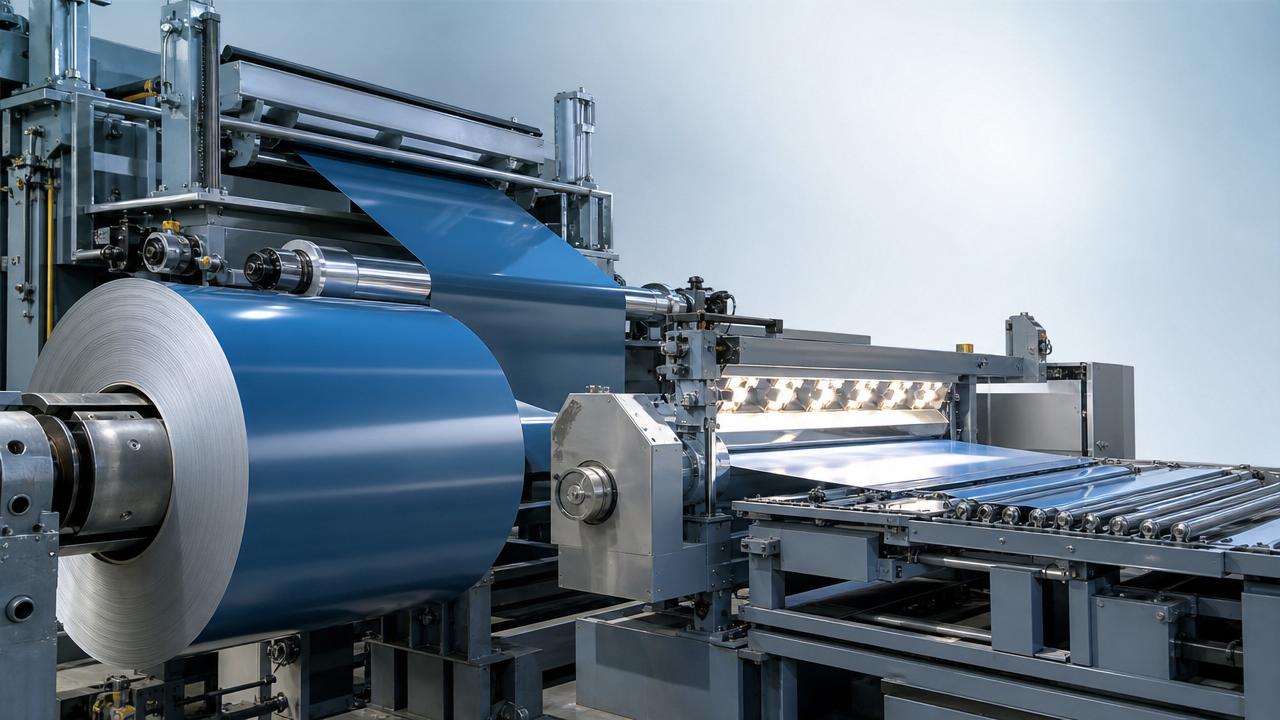
Common Color Coating Line Defects and How to Prevent Rework
A stable Color Coating Line depends on more than paint quality.
Small defects often begin upstream, then grow into rework, scrap, delayed delivery, and unstable appearance on finished steel.
The usual trouble points are easy to recognize: pinholes, uneven coating, poor adhesion, and visible color variation.
What is harder is finding the real cause quickly inside a running Color Coating Line.
In practice, defect control comes from linking substrate condition, pretreatment, roll settings, curing, and inspection into one process view.
The questions below follow that logic, so troubleshooting becomes more systematic and less reactive.
Why do defects in a Color Coating Line keep repeating even after touch-up?
Because rework often treats the symptom, not the process condition that created it.
A pinhole may look like a coating issue, yet the trigger could be oil residue, trapped moisture, or poor oven balance.
Uneven color may seem like a paint batch problem, while line speed fluctuation or roll pressure drift is the real source.
In a steel plant, repeated defects usually come from one of three patterns.
- The defect is detected too late, after several coils already passed.
- The line checks appearance, but not the process variables behind appearance.
- Corrective action is inconsistent between shifts or coating campaigns.
A more useful approach is to build a defect map for the Color Coating Line.
That map should connect defect type, coil position, machine condition, chemical status, and oven profile at the same moment.
Once those links are visible, recurring rework usually drops faster than expected.
What usually causes pinholes, craters, and surface marks on coated steel?
These are among the most searched defects in any Color Coating Line because they appear suddenly and affect visual quality immediately.
Pinholes are tiny voids in the coating film.
Craters look like round depressions caused by contamination or poor wetting.
Surface marks include scratches, chatter patterns, drag lines, and roller-related impressions.
The root causes are usually mixed rather than single.
Typical sources worth checking first
- Residual rolling oil or cleaner carryover on the strip surface.
- Poor rinsing quality, especially when conductivity is unstable.
- Airborne dust, silicone contamination, or sealant transfer near the coating head.
- Coating viscosity outside the controlled window.
- Worn backup rolls, dirty applicator rolls, or edge damage.
- Over-fast solvent release in the oven, causing film rupture.
A useful clue is defect distribution.
Random defects across the strip often point to contamination.
Periodic marks often point to a roll, bearing, or tension-related mechanical issue.
If defects increase after speed changes, coating rheology and flash-off conditions should be reviewed together.
Substrate quality also matters.
When the steel strip has inconsistent zinc surface condition, coating wetting becomes less predictable.
For that reason, some lines pay close attention to base material consistency, including products such as SGCD2 Galvanized Steel Strip.
If coating thickness looks uneven, where should troubleshooting begin?
Start with the simplest question: is the problem cross-strip, lengthwise, or both?
Cross-strip variation often comes from roll gap, roll crown, strip shape, or pressure imbalance.
Lengthwise variation is more often linked to line speed fluctuation, paint feed instability, or viscosity drift over time.
In a Color Coating Line, uneven coating is rarely solved by changing only one setting.
The following table helps narrow the search faster.
Needle-like corrections on the coater often create new instability if the line data is not reviewed first.
A better habit is to compare thickness trend, paint viscosity, strip width, and roll wear history on the same chart.
That turns a vague appearance complaint into a measurable Color Coating Line control task.
Poor adhesion after curing: is it pretreatment, paint, or oven settings?
Usually, all three can contribute, but pretreatment should be checked before blaming the paint.
When adhesion fails, the bond between coating and metallic surface was never fully established.
This can happen even when the coated strip looks smooth at first glance.
Common warning signs include tape test failure, edge flaking after forming, and peeling during T-bend testing.
Questions that help separate the cause
- Did pretreatment concentration, pH, or temperature drift during production?
- Was the strip fully dried before primer application?
- Did peak metal temperature reach the coating supplier’s curing window?
- Was dwell time reduced when the line speed increased?
- Did the substrate surface chemistry change between coil batches?
A common mistake is reading oven set temperature as actual cure confirmation.
In reality, peak metal temperature and time at temperature matter more than hot air display values.
If a Color Coating Line switches between different strip thicknesses, curing response can change significantly.
Another point is substrate cleanliness and surface uniformity.
Consistent galvanized input, including SGCD2 Galvanized Steel Strip, can reduce one variable in adhesion troubleshooting.
That does not replace process discipline, but it makes diagnosis easier.
Color variation seems minor at first. Why does it become a major rework issue?
Because color difference is not judged only by instruments.
Batch-to-batch appearance, gloss shift, and metamerism can become visible during slitting, profiling, or final installation.
That is why color stability in a Color Coating Line is both a technical and operational issue.
The usual reasons include inconsistent film thickness, cure variation, pigment settling, and changes in substrate reflectivity.
Gloss can also shift when oven balance changes, even if measured color remains within range.
In practical control, these steps help more than repeated visual sorting.
- Keep strict paint mixing time and circulation discipline.
- Control viscosity by temperature as well as by solvent ratio.
- Use master panels and fixed lighting conditions for release decisions.
- Record oven profile changes during every color transition.
- Avoid blending coils from unstable process windows into one order.
Many rework cases begin when “acceptable” color drift is allowed to continue for too long.
Early isolation is often cheaper than later sorting, recoating, or field claims.
What daily controls reduce rework in a Color Coating Line the most?
The biggest gains usually come from routine control, not dramatic equipment changes.
A Color Coating Line performs better when preventive checks are short, specific, and tied to defect history.
The most useful controls are the ones people can repeat every shift without ambiguity.
A practical daily checklist
- Verify strip cleanliness before coating, not only after a defect appears.
- Confirm pretreatment chemistry, rinse quality, and dryer performance.
- Track paint viscosity, temperature, solids, and circulation intervals.
- Inspect coater rolls for pickup, wear, or edge damage.
- Review oven profile against actual strip thickness and line speed.
- Use fast in-line appearance checks plus scheduled adhesion testing.
- Stop and isolate when trends drift, before the entire coil is affected.
It also helps to classify defects by cost impact.
Some defects are cosmetic and containable.
Others, such as poor adhesion or cure failure, should trigger immediate hold decisions.
That distinction prevents low-value rework while protecting downstream forming and service performance.
A final question: what is the smartest next step when defect rates start rising?
Do not jump straight to recoating plans.
First, define which defect is increasing, where it appears, and what changed in the line conditions that day.
Then compare substrate condition, pretreatment records, coating data, and curing trend in one review.
That method usually reveals whether the Color Coating Line problem is chemical, mechanical, thermal, or material-related.
The goal is not only to fix today’s coil.
It is to reduce repeated rework by building a clear standard for diagnosis, response time, and release criteria.
If performance is still unstable, the next useful move is a structured audit of process windows, defect records, and incoming steel consistency.
That gives a stronger basis for improving coating quality, line efficiency, and decision-making across future production runs.
Get real-time quotes
Interested? Leave your contact details.