
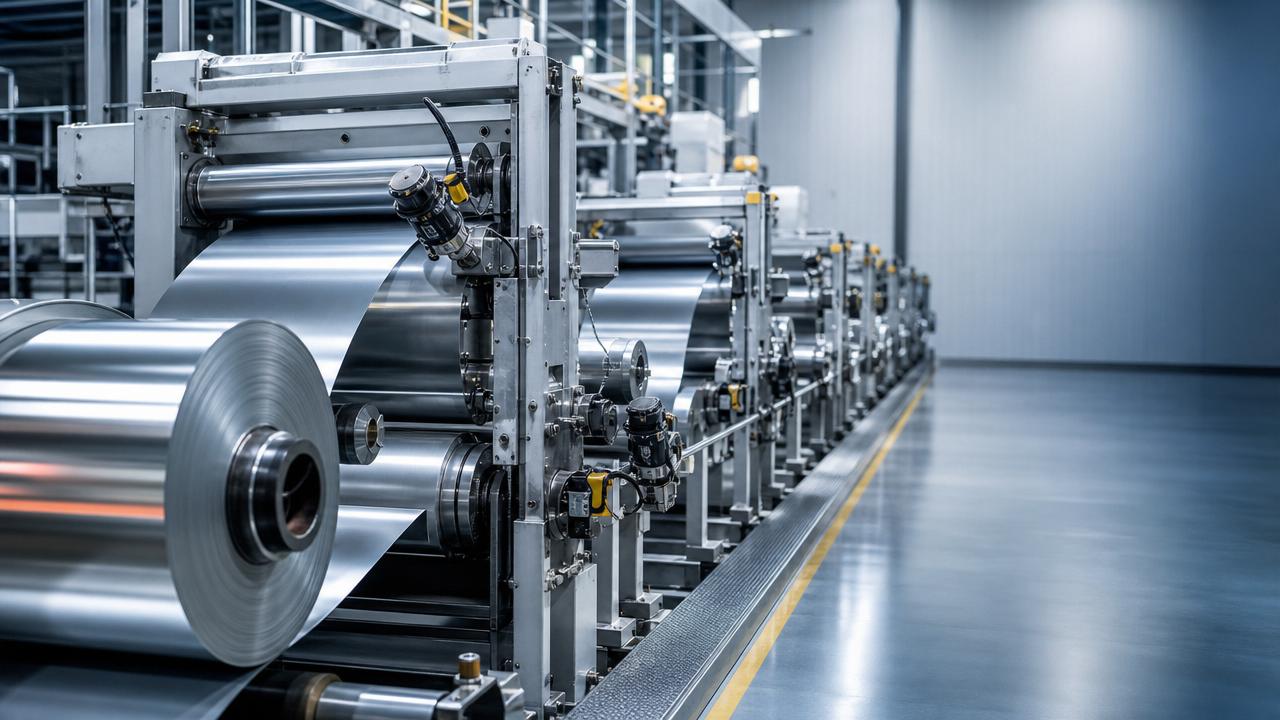
Before expanding output, every Stainless Steel Line needs a practical review of its real limits. Capacity plans often look simple on paper, but field conditions usually tell a different story.
A good expansion decision starts with facts: current throughput, repeatability, downtime patterns, utility load, and layout flexibility. If those basics are unclear, added investment may only magnify existing problems.
This article focuses on the checks that matter most before scaling a Stainless Steel Line. The aim is not only more output, but stable output with acceptable cost, quality, and delivery performance.
Start with the current bottleneck, not the desired capacity
Many expansion projects begin with a target tonnage. That is useful, but it should come after identifying the actual bottleneck in the Stainless Steel Line.
A line may appear limited by rolling speed, while the real issue is coil changeover, annealing consistency, slitting accuracy, or crane movement. If the wrong constraint is upgraded, capacity gains stay small.
- Map actual cycle time by section, including waiting, changeover, inspection, and handling. A Stainless Steel Line often loses more hours in hidden stops than in rated process speed.
- Compare nameplate capacity with sustained weekly output. If the gap is large, focus first on stability and utilization before adding new equipment or extending line length.
- Review downtime by cause code for the last six to twelve months. Repeat failures usually point to the true bottleneck and give better direction than operator assumptions.
- Check product mix impact. A Stainless Steel Line handling wide thickness variation may lose expansion potential because frequent setup shifts consume the available production window.
What often gets missed here
Short-term peak runs can be misleading. A Stainless Steel Line that reaches target speed for one shift may still fail to hold that level across a month because maintenance, material flow, and operators are not aligned.
It also helps to separate “process bottleneck” from “management bottleneck.” In some plants, planning delays and coil dispatch rules restrict output more than the line itself.
Check equipment condition before planning any speed increase
If equipment health is weak, expansion turns into a repair project. A faster Stainless Steel Line puts more stress on drives, rollers, bearings, strip tracking devices, and automation components.
- Inspect critical wear parts and compare remaining life with the expansion timeline. A Stainless Steel Line cannot sustain higher output if key assemblies are already near replacement thresholds.
- Verify motor load, gearbox temperature, vibration trend, and lubrication condition. These signals reveal whether existing mechanical systems can tolerate higher line speed or longer shifts.
- Review control system obsolescence. Expansion may fail if PLC modules, drives, or sensors are unsupported, because troubleshooting time increases exactly when production demand rises.
- Test strip alignment and tension stability under current high-load conditions. Small instability in a Stainless Steel Line often becomes a major scrap source after speed upgrades.
This is where many teams discover that maintenance backlog is the silent barrier. An expansion budget should include reliability restoration if condition data shows weak foundations.
Confirm process capability, not just machine availability
A Stainless Steel Line can be mechanically available and still be process-limited. Surface finish, flatness, thickness control, edge quality, and heat treatment repeatability all affect usable output.
In stainless steel production, quality drift is expensive. Scrap, rework, and downgraded coils erase the value of extra throughput very quickly.
- Measure capability on key quality parameters under normal and peak conditions. If Cpk or process spread worsens at higher speed, expansion should be redesigned before execution.
- Check whether furnaces, cooling zones, pickling stages, or finishing sections maintain uniform treatment across the full width and thickness range planned after expansion.
- Validate inspection capacity. A faster Stainless Steel Line needs matching test speed, surface detection reliability, and data traceability, or defects will escape to later stages.
- Review scrap and rework history by grade and dimension. Capacity gains should be modeled on good output, not gross tonnage, to avoid overstating the business case.
A practical scenario
When a Stainless Steel Line shifts toward thinner gauges, line speed may increase in theory. In practice, strip shape sensitivity rises, and tension control becomes more demanding.
That means a small investment in control tuning or flatness monitoring may unlock more real output than a major mechanical upgrade. This is why process data matters early.
Utilities and support systems must scale with the line
A Stainless Steel Line does not expand alone. Power supply, compressed air, cooling water, gas, exhaust, and wastewater systems all need spare capacity and stable performance.
- Check utility load with simultaneous operation assumptions, not isolated machine values. A Stainless Steel Line may pass design review but fail during full-plant peak demand.
- Include treatment and discharge limits in the review. Expansion can be delayed if wastewater, acid recovery, or fume handling systems reach permit boundaries first.
- Review redundancy on critical utilities. One weak compressor, pump, or transformer can turn a higher-capacity plan into a higher-risk operating model.
Sometimes support infrastructure improvements have value beyond the line itself. For example, civil reinforcement or drainage upgrades may also help storage or logistics areas, much like planning around A690 Z-type steel sheet pile applications in demanding industrial environments.
Review layout, material flow, and crane logic early
A Stainless Steel Line may have enough machine capacity but still lose time through poor internal logistics. Coil staging, forklift paths, crane conflicts, and buffer space deserve early review.
- Trace material movement from inbound coil receipt to finished dispatch. If transfer distances or handoff points increase, the Stainless Steel Line will wait even after equipment upgrades.
- Confirm buffer size before and after critical sections. Too little space causes stop-start operation, while poorly placed buffers create extra handling and damage risk.
- Assess crane capacity, hook availability, and dispatch rules during busy periods. Expansion often fails because lifting resources become the new hidden bottleneck.
- Review maintenance access and safety clearance in the revised layout. Tighter installation may raise output potential but lengthen repair time and complicate shutdown work.
Another field reality
Layout issues are especially common in brownfield upgrades. The Stainless Steel Line might fit physically, but spare parts access, emergency routes, and coil turnaround space may become compromised.
That is why simulation, marked floor trials, and crane path checks are worth doing before finalizing the installation package.
Do not overlook people, automation, and startup rhythm
Capacity expansion is rarely only a hardware job. A Stainless Steel Line also depends on operating discipline, alarm handling, maintenance response, and data visibility.
- Define the future staffing model by shift, including maintenance and quality support. Higher speed on a Stainless Steel Line usually shortens response time for any abnormal event.
- Upgrade data collection before startup if current records are inconsistent. Reliable downtime, speed, scrap, and energy data are essential for proving expansion performance.
- Plan startup in stages with clear acceptance gates. Ramp output only after stability, quality, and utility load are verified under each new operating condition.
- Prepare spare parts and vendor support for the first months. New bottlenecks often appear after commissioning, and fast resolution protects the expansion payback period.
If the project includes adjacent civil or storage work, it can be useful to align timelines with other steel infrastructure decisions, including solutions such as A690 Z-type steel sheet pile where site conditions require strong retaining performance.
A simple way to decide whether to move forward
Before approving expansion, test the Stainless Steel Line against four questions.
First, is the real bottleneck clearly proven by data? Second, can equipment and process capability support the target? Third, will utilities and layout remain stable? Fourth, is the startup plan realistic?
If one answer is weak, the project may still proceed, but scope and sequence should be adjusted. In many cases, phased improvement produces better returns than one large jump.
The best Stainless Steel Line expansion is not the fastest to approve. It is the one that reaches new output with controlled risk, steady quality, and room for future optimization.
As a next step, build a short verification sheet covering bottlenecks, condition, capability, utilities, layout, and startup readiness. That single review can prevent expensive rework later.
Get real-time quotes
Interested? Leave your contact details.