Carbon Steel Mill Upgrade Costs: What Impacts ROI Most
Upgrading a Carbon Steel Mill can raise throughput, cut energy use, and improve consistency. But stronger ROI does not come from spending more. It comes from spending in the right places.
For capital approval, the key question is simple: which upgrade costs change payback fastest, and which only add complexity? In a Carbon Steel Mill, a few cost drivers usually matter far more than the rest.
This article focuses on those high-impact areas, along with practical checks that help compare proposals, control risk, and protect long-term returns.
Start with the costs that move payback first
Not every line item has the same effect on ROI. In most Carbon Steel Mill projects, the best returns come from improvements tied directly to output, yield, energy, downtime, and quality stability.
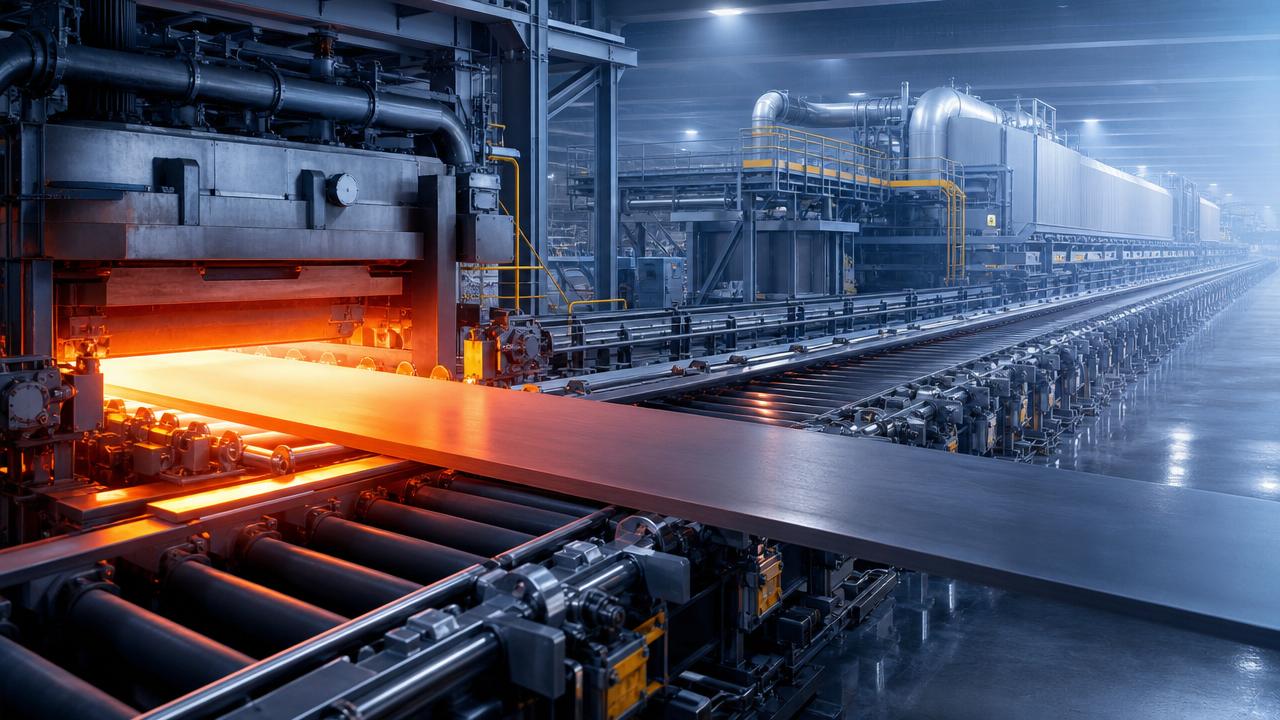
- Prioritize upgrades that remove bottlenecks in rolling, reheating, or finishing. If throughput rises without matching labor growth, the Carbon Steel Mill usually sees the fastest payback improvement.
- Check energy-saving claims against actual load profiles. Furnace, motor, and drive upgrades only create strong ROI when baseline consumption is measured by shift, product mix, and utilization.
- Focus on yield before headline capacity. Small reductions in scrap, crop loss, scale loss, or rework often outperform expensive expansion projects in overall Carbon Steel Mill returns.
- Treat unplanned downtime as a financial issue, not only a maintenance issue. Upgrades that stabilize uptime can protect revenue, delivery performance, and margin at the same time.
A common mistake is valuing a project mainly on nameplate capacity. If upstream charging, downstream cooling, or finishing cannot keep pace, expected gains stay on paper.
The biggest upgrade cost categories to test carefully
A Carbon Steel Mill upgrade budget usually includes equipment, civil work, installation, automation, commissioning, and production disruption. The hidden gap is often in integration and ramp-up.
1) Core process equipment
This includes furnaces, rolling stands, drives, descaling, cooling, handling, and finishing systems. These assets often create the main production upside, but they also absorb most capital.
- Ask whether new equipment increases actual saleable tons or only rated speed. In a Carbon Steel Mill, saleable output matters more than technical maximums during approval.
- Review wear parts, maintenance intervals, and spare lead times early. A lower purchase price can weaken ROI if replacement cycles are short or imported parts are hard to source.
2) Automation and control systems
Automation often looks secondary, but in many Carbon Steel Mill projects it is what turns hardware investment into stable output. Better control can reduce operator variation, cobbles, and off-spec production.
- Estimate value from consistency, not just labor savings. Better process control can improve dimensional accuracy, reduce scrap, and shorten startup time after changeovers.
- Confirm software compatibility with existing MES, ERP, and historian systems. Integration gaps can delay benefits and create extra engineering costs after approval.
3) Civil, utility, and plant modification work
These costs are easy to underestimate. Foundation reinforcement, cable routing, compressed air, water treatment, and gas supply upgrades can change total project economics quickly.
- Require a utility readiness review before final approval. Furnace or motor upgrades may fail to deliver if electrical capacity, cooling water, or gas pressure is already constrained.
- Separate must-have civil work from convenience work. This keeps the Carbon Steel Mill upgrade focused on ROI instead of bundling in low-return infrastructure extras.
Where ROI is often won or lost
In practice, ROI is usually shaped by a short list of operating variables. These deserve more attention than broad sales slides or generic efficiency claims.
If a Carbon Steel Mill proposal cannot quantify at least three of these clearly, the ROI case is probably still too weak for confident approval.
A few real-world situations that change the answer
If the line runs near full utilization and regularly misses shipments, throughput upgrades usually deserve priority. But only after confirming reheating, handling, and finishing can support the same pace.
If order volume is stable but margins are tight, yield and energy projects often beat expansion. In this case, a Carbon Steel Mill gets better ROI from operational efficiency than from added rated capacity.
If product complaints or dimensional variation are rising, automation and control may create the stronger return. That is especially true when claims, sorting, or rework costs are already eroding margin.
Even cross-material procurement teams sometimes compare process disciplines across plants. For example, packaging operations sourcing 5A05 Food grade Aluminum Foil often apply the same approval logic: stable quality and lower waste can justify capital better than simple speed claims.
Costs that are often underestimated
This is where many Carbon Steel Mill budgets drift. The issue is not only extra cost. It is delayed payback caused by items excluded from the first business case.
- Include ramp-up losses in the model. New equipment may need weeks of tuning, and temporary yield drops can materially change first-year ROI expectations.
- Price shutdown windows realistically. Lost production during installation is often more expensive than the mechanical work itself, especially in a highly utilized Carbon Steel Mill.
- Budget operator training and maintenance readiness. Without them, the line may never reach expected performance, even when equipment quality is strong.
- Check environmental and safety compliance costs early. Dust collection, emissions control, guarding, and permitting can reshape the investment profile late in the process.
Questions that sharpen capital approval
A strong approval process is less about collecting more slides and more about asking tighter questions. These are usually the ones that expose weak assumptions.
- What is the current constraint in the Carbon Steel Mill, and how was it measured? Approving upgrades without a verified bottleneck often leads to disappointing results.
- Which savings are guaranteed by design, and which depend on operator behavior? This distinction matters when estimating actual versus theoretical ROI.
- How sensitive is payback to lower utilization, higher scrap, or delayed startup? A simple downside model gives a much clearer risk picture.
- Are suppliers committing to performance tests, spare support, and commissioning milestones? Contract structure often influences realized returns more than brochure claims.
A practical way to compare upgrade options
When several Carbon Steel Mill projects compete for budget, it helps to score each option on a few common factors instead of debating every technical detail equally.
This kind of comparison keeps the discussion commercial, while still respecting technical reality. It also helps separate strategic upgrades from expensive maintenance catch-up.
What usually deserves the green light first
In many cases, the best first move is not the largest project. The stronger candidate is often the upgrade that removes a verified bottleneck, lifts yield, and can be commissioned with limited disruption.
For a Carbon Steel Mill, that may mean drives and controls before a full line rebuild, or reheating efficiency before expansion. The right answer depends on current constraints, not on vendor sequencing.
Before final approval, validate three things: the bottleneck is real, the benefit can be measured, and the downtime plan is realistic. If those points are clear, the ROI case is usually much stronger and easier to defend.
Get real-time quotes
Interested? Leave your contact details.