
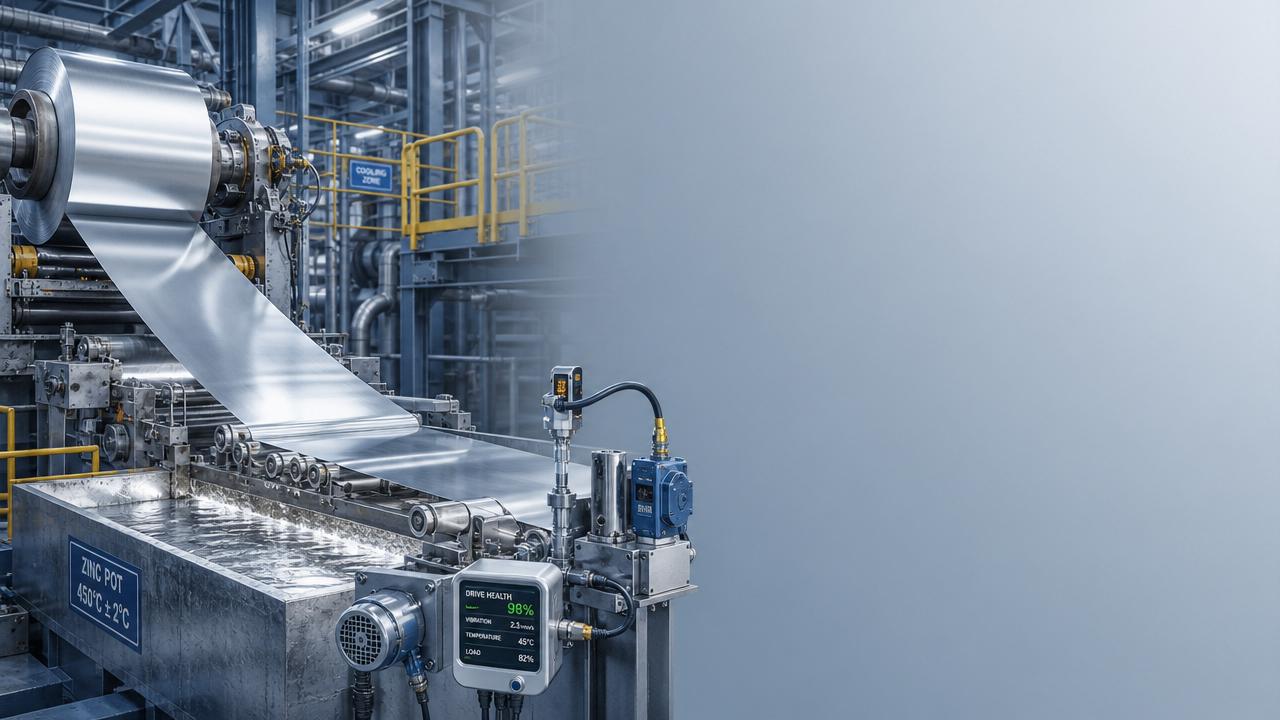
Galvanizing Line downtime usually starts long before the stop
A Galvanizing Line rarely shuts down because of one dramatic breakdown.
More often, downtime grows from small maintenance risks that stay unnoticed across several sections of the line.
Roll wear, sensor drift, poor strip tracking, unstable bath chemistry, and delayed spare replacement can combine into a costly stop.
In steel processing, that kind of interruption affects output, coating quality, energy use, and delivery reliability at the same time.
The maintenance challenge is not identical in every plant.
A Galvanizing Line running thin automotive strip faces different risks from a line handling construction grades or frequent specification changes.
That is why practical maintenance planning has to follow the operating scene, not only the equipment manual.
Why the same Galvanizing Line risk behaves differently in different operating scenes
The root cause may look similar, but the failure path changes with production rhythm.
Continuous high-volume campaigns usually expose thermal fatigue, bearing load, and zinc pot stability.
Mixed-order production creates another pattern.
Frequent width, thickness, and coating changes increase setup errors, recipe mismatch, and inspection gaps.
Older lines add a third layer of risk.
Mechanical structures may still be sound, but obsolescent drives, cables, or instruments can turn a minor alarm into a long stoppage.
In actual operation, the better judgment is to ask where hidden wear becomes production loss fastest.
When continuous production is the priority, wear becomes the hidden trigger
On a Galvanizing Line with long uninterrupted runs, maintenance teams often focus on major assemblies.
The more common problem is smaller component degradation that stays within alarm limits until strip quality shifts.
Sink rolls, stabilizer rolls, bearings, and bushings are typical examples.
If replacement timing is delayed, vibration and coating variation appear before a full stop happens.
This scene needs trend-based inspection rather than simple calendar maintenance.
Temperature rise, torque change, motor load, and strip surface deviation should be reviewed together.
A single reading may seem acceptable.
The pattern over several shifts often tells the real story.
What is often missed in high-throughput lines
- Lubrication checks recorded on time, but not verified against actual contamination.
- Roll surface condition inspected visually, while dimensional wear is left unmeasured.
- Drive alarms cleared repeatedly without tracking recurrence by line section.
- Spare parts stocked, but not ranked by downtime impact.
Where support frames or fabricated brackets are replaced during overhaul, material selection also matters.
For some structural repair tasks, Q355 Carbon steel bar/rod may be considered where strength, machinability, and workshop compatibility are required.
In mixed-order production, process instability causes maintenance problems faster
A Galvanizing Line handling many specifications does not fail only because parts wear out.
It often loses stability because process parameters move too often and verification routines stay too loose.
Air knife distance, pressure balance, strip speed, entry cleanliness, and furnace atmosphere interact closely.
If one parameter is adjusted without confirming the others, operators may chase defects instead of solving them.
That creates rework, strip breaks, and emergency intervention.
In this scene, maintenance is tied directly to process discipline.
Sensors, actuators, and feedback loops must be treated as production-critical assets, not secondary instruments.
Calibration frequency should reflect recipe change frequency.
A monthly check may be enough for steady campaigns, but too slow for highly variable schedules.
A practical comparison of scene differences
Older Galvanizing Line systems usually fail at the interfaces
In aging lines, the highest risk is not always the oldest machine body.
The bigger threat often sits at the interface between mechanical parts, electrical controls, and replacement components.
A motor may be upgraded, but the feedback device remains outdated.
A sensor may be replaced, but signal shielding or mounting accuracy is ignored.
That kind of mismatch creates intermittent faults, which are harder than obvious failures.
This is also where maintenance records need more detail.
If logs mention only the replaced item, the real cause chain stays invisible.
A better record links fault symptoms, surrounding conditions, temporary actions, and restart behavior.
For steel line repair work, even simple fabricated supports or guide-related parts should be reviewed for fit, load path, and corrosion exposure.
In some maintenance workshops, Q355 Carbon steel bar/rod is relevant not as a sales item, but as a practical option for compatible steel component fabrication.
Common maintenance misjudgments that turn manageable issues into outages
Some risks persist because they look small in isolation.
In a Galvanizing Line, those small issues often interact across sections.
- Treating repeated minor alarms as nuisance events instead of early warnings.
- Inspecting equipment on a fixed calendar while production intensity has changed.
- Comparing spare prices without comparing replacement lead time and downtime exposure.
- Assuming similar strip grades create the same furnace and coating behavior.
- Checking single devices, but not confirming how upstream variation affects downstream failures.
The pattern behind these errors is simple.
Judgment stays component-centered while downtime is system-centered.
What a more reliable Galvanizing Line maintenance plan should include
A useful plan does not need to be complicated, but it must reflect operating reality.
- Group assets by downtime consequence, not only by equipment type.
- Adjust inspection frequency when product mix, speed, or coating demand changes.
- Track recurring alarms by section and by shift to expose hidden patterns.
- Set replacement criteria for wear parts before visible damage appears.
- Validate calibration and control response after every significant setup change.
- Review spare availability for long-lead components before major campaign periods.
Where plants improve fastest is usually not in one dramatic retrofit.
It is in aligning wear monitoring, process verification, and spare planning around the real Galvanizing Line bottlenecks.
The next step is to judge risks by scene, not by habit
Reducing unplanned downtime on a Galvanizing Line starts with a sharper view of where failures develop under actual operating conditions.
Some lines need tighter control over wear progression.
Others need stronger recipe discipline, interface checks, or faster spare decisions.
The useful approach is to map each stoppage against line section, product condition, maintenance history, and restart difficulty.
From there, it becomes easier to define inspection priorities, confirm component compatibility, and set maintenance intervals that match real steel production pressure.
That kind of scene-based review gives a Galvanizing Line better reliability without relying on guesswork or repeated emergency repair cycles.
Get real-time quotes
Interested? Leave your contact details.