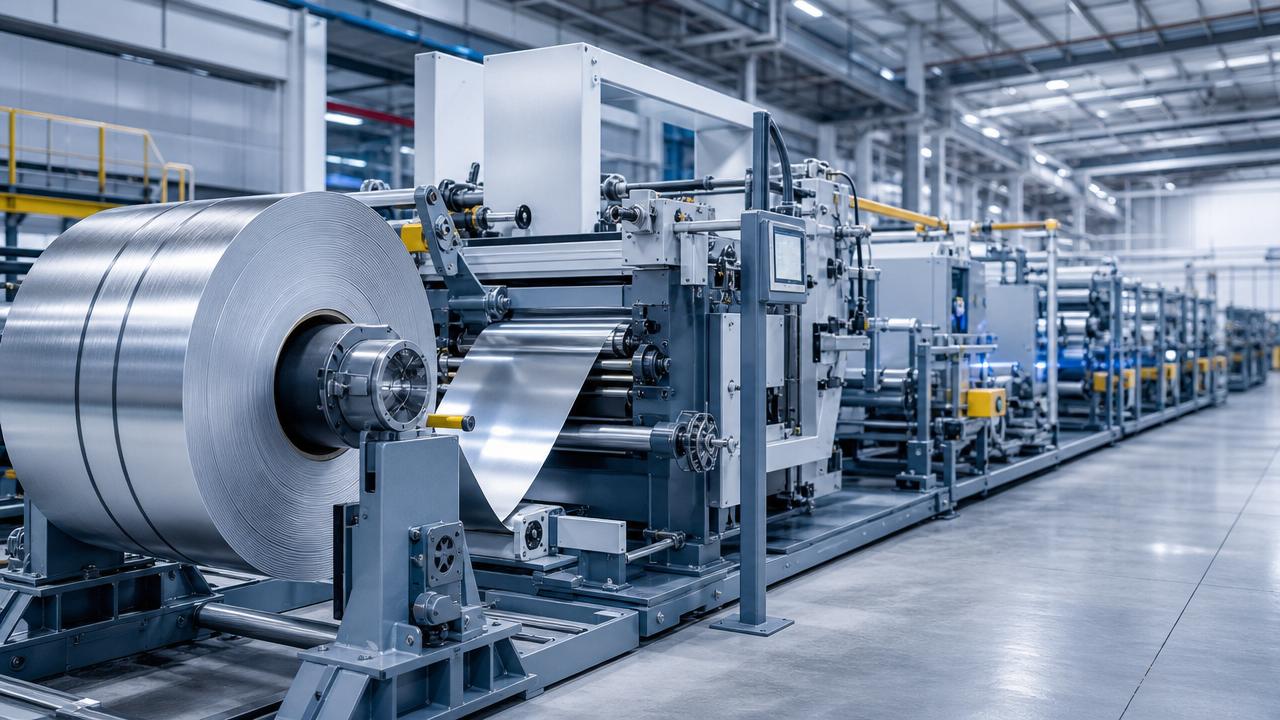
As steel producers prepare new capacity plans for 2026, equipment choices are moving from a technical discussion to a capital strategy issue.
Steel Processing Equipment now affects far more than throughput. It shapes energy use, labor structure, product consistency, maintenance exposure, and the ability to respond to changing order mixes.
That is why new plant investment is increasingly evaluated through the lens of equipment flexibility, digital control, and lifetime operating economics rather than nameplate capacity alone.
Why equipment strategy is becoming central to plant investment
In the steel industry, new plants are being designed under tighter cost pressure and higher quality expectations.
Buyers expect reliable tolerances, cleaner surfaces, traceability, and shorter lead times. Utilities are more expensive. Unplanned downtime is harder to absorb.
Under these conditions, Steel Processing Equipment is no longer a downstream support function. It is part of the business model.
A line that runs efficiently but cannot switch grades quickly may underperform in mixed-demand markets.
A system with lower upfront cost but weak diagnostics may create higher service spending over ten years.
This shift matters especially in flat steel, coated steel, strip handling, slitting, leveling, cut-to-length, and surface treatment operations.
What Steel Processing Equipment includes in a 2026 investment context
The term covers more than standalone machines. It includes integrated production units, control systems, material handling, quality inspection, and data infrastructure.
For many greenfield or expansion projects, the most important question is not which machine is fastest.
The more useful question is how the whole line performs across product range, uptime, energy use, staffing, and maintenance complexity.
Core investment areas usually include
- Slitting and cut-to-length lines for dimensional accuracy and order flexibility
- Leveling and tension control systems for flatness and downstream formability
- Pickling, coating, and galvanizing support equipment for surface quality
- Automated coil handling, packaging, and logistics interfaces
- Sensors, MES connectivity, and predictive maintenance platforms
In other words, Steel Processing Equipment decisions increasingly define what products a plant can profitably serve.
The trends shaping 2026 decisions
Automation is shifting from labor reduction to process stability
Automation used to be justified mainly by labor savings. That logic is now too narrow.
Today, automated Steel Processing Equipment is valued for repeatability, safer handling, faster changeovers, and lower variation between shifts.
This is especially relevant when plants process a broader grade portfolio or serve higher-specification sectors.
Energy efficiency is becoming a first-line screening factor
Energy is no longer a background assumption in plant economics. It is a board-level variable.
Drive systems, furnace support units, compressed air design, heat recovery, and standby power behavior now influence equipment selection early in project planning.
A modest efficiency gain per ton can materially change payback when annual volumes are large.
Digital monitoring is moving from optional to expected
Condition monitoring, remote diagnostics, and production analytics are becoming standard layers in modern Steel Processing Equipment packages.
The practical value is clear. Plants can identify wear trends earlier, reduce emergency stoppages, and improve root-cause analysis when quality deviations appear.
This also supports traceability demands in coated and precision strip markets.
Flexible lines are gaining priority over single-purpose optimization
Demand patterns remain uneven across end-use sectors. That makes product mix adaptability more valuable than before.
Equipment that handles multiple widths, thicknesses, coating requirements, or packaging formats can protect utilization when one segment slows.
How these trends affect real business outcomes
The strongest projects are not always the ones with the biggest lines. They are often the ones with the best operational fit.
In practical terms, Steel Processing Equipment choices influence margin protection as much as production capability.
Material mix and downstream requirements matter more than ever
Equipment planning should start from the products a plant intends to sell, not from a generic line specification.
Surface-sensitive products, coated strip, thin-gauge material, and automotive-adjacent applications all demand tighter equipment coordination.
For example, when a project includes galvanized output, line decisions must consider coating consistency, strip tension, surface protection, and packaging quality.
That is where material positioning and processing capability intersect. A product such as DX53D+Z Galvanized Steel Strip reflects the kind of downstream requirement that can expose weaknesses in line stability or handling design.
This does not mean every plant needs the same technology stack. It means equipment should match the commercial target mix with much greater precision.
Where investment mistakes usually happen
The most expensive errors often happen before equipment arrives on site.
- Overvaluing peak speed while ignoring changeover time
- Comparing capex without modeling maintenance and energy cost
- Underestimating software integration and data architecture needs
- Choosing line layouts that restrict future product additions
- Treating quality inspection as an add-on rather than a design element
A narrower issue is supplier coordination. Separate machines may perform well individually but create bottlenecks when controls, tolerances, or service practices do not align.
This is why integrated Steel Processing Equipment planning has become more valuable than piecemeal procurement.
A practical framework for evaluating options
Before finalizing a 2026 project, it helps to test equipment decisions against a structured set of questions.
Check the line against commercial reality
Does the equipment support the actual order profile, or only the ideal production case?
Can it switch efficiently across sizes, grades, and surface requirements without excessive scrap or downtime?
Model total ownership cost
Review energy, wear parts, service access, operator requirements, software updates, and spare availability.
A lower purchase price may not survive a full ten-year cost comparison.
Look at future optionality
Can the line accept added inspection modules, automation upgrades, or broader product specifications later?
Optionality matters when market direction is uncertain.
Match equipment precision to product ambition
If the strategy includes higher-value coated or formed products, the tolerance and surface performance of Steel Processing Equipment should be assessed accordingly.
What to do next before committing capital
The next step is rarely to compare brochures. It is to clarify the plant’s target economics and product path.
Map the expected mix, identify bottleneck risks, and test whether proposed Steel Processing Equipment supports both startup performance and later expansion.
It also helps to review sample downstream requirements, including coated strip categories such as DX53D+Z Galvanized Steel Strip, to confirm that the planned line can consistently deliver the intended quality level.
In 2026, the strongest investment decisions will likely come from treating equipment not as a procurement line item, but as the operating foundation of the entire steel plant.
Get real-time quotes
Interested? Leave your contact details.